
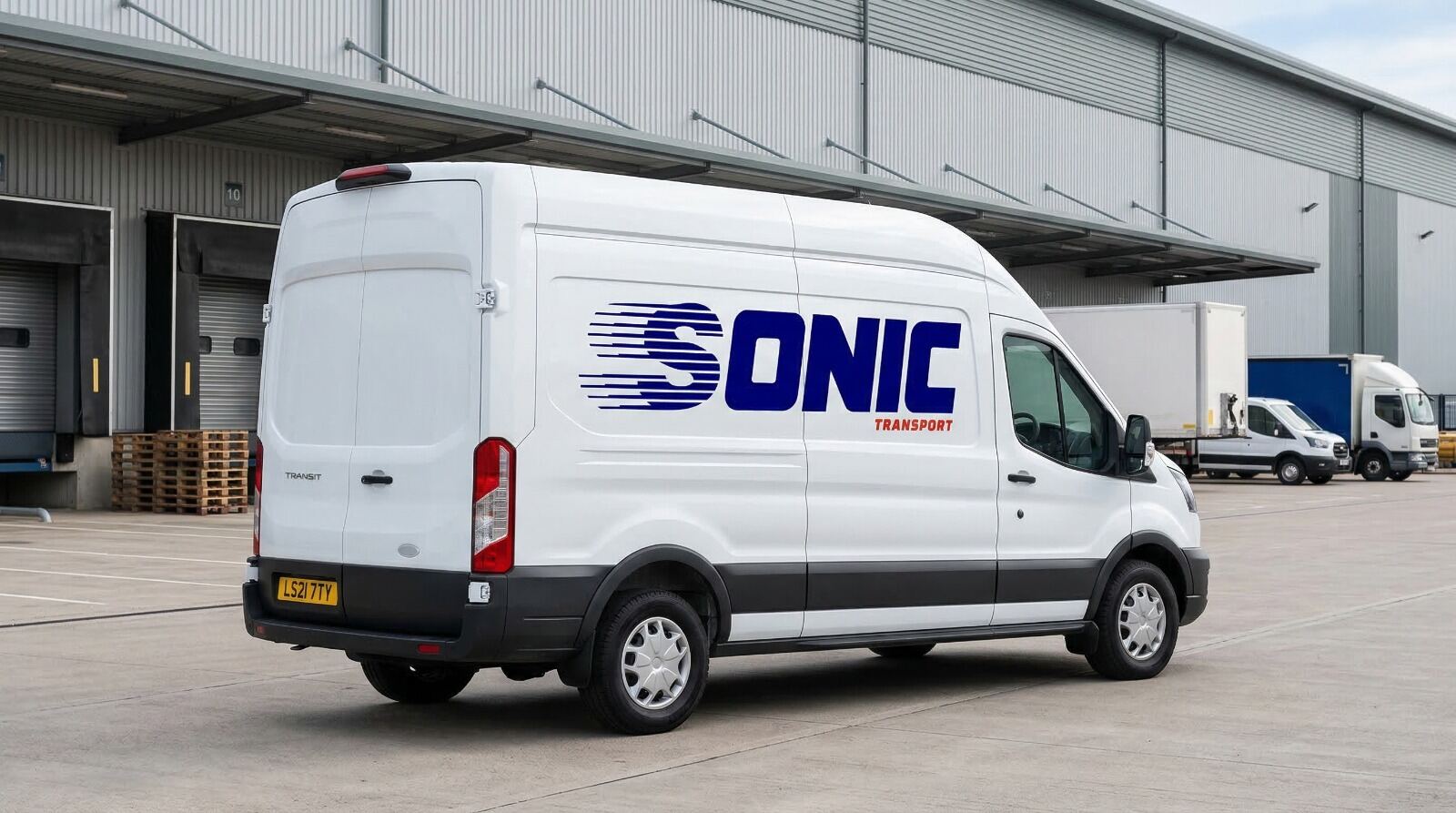
Sonic Transport Long Wheelbase van on a commercial delivery

The LWB Van: Serious Carrying Capacity Without the Complexity of a Larger Vehicle

A focussed team that knows exactly when an LWB is the right call and why

A Longer Load Space for Freight That Needs It

Up to 4.3 metres of load length and a payload of one to 1.5 tonnes handles what shorter vans simply cannot accommodate, from long sections and large appliances to high volume consignments that cube out before they weight out.

Van Access at the Capacity of Something Larger

No HGV licence requirement, no routing restrictions over 3.5 tonnes. The LWB reaches city centres, hospital sites, retail parks and locations that would turn a larger vehicle away, while still carrying loads that would otherwise demand far more complex logistics.

Experienced Handling on Every Load

Fragile items, long unwieldy loads and high value goods require proper assessment, loading and securing. Our drivers manage this on LWB jobs every day, and it shows in how consignments arrive at your customer's premises.

Sonic Transport Long Wheelbase van side view

Long wheelbase van specifications

The LWB bridges the gap between a standard van and a larger commercial vehicle. Generous load length, high roof clearance and a meaningful payload make it the most commercially intelligent choice for freight that has outgrown a shorter van.

Length
3 to 4 m
Width
1.2 m
Height
1.7 m
Max weight
1,200 kg
Pallet capacity
3 euro pallets
Tracking
Live GPS

When to choose an LWB van

  • Long sections of pipe, conduit, timber or aluminium extrusions
  • Furniture, fitted kitchen components and large appliances
  • Exhibition and event materials that need length and headroom
  • Bulk lightweight stock that cubes out before it weights out
  • Medical equipment and catering furniture deliveries
  • High volume consignments into locations with access restrictions

What a Long Wheelbase Van Actually Gives You

The long wheelbase van is one of the most capable and practical vehicles in the light commercial range. With a typical payload of between one and 1.5 tonnes and a load length of up to 4.3 metres in a high roof configuration, it bridges the gap between a standard van and a larger commercial vehicle in a way that delivers genuine operational value. For loads that are too long, too bulky or too voluminous for a short wheelbase van but do not require the complexity, cost or routing considerations of a 3.5 tonne vehicle or above, the LWB is frequently the most commercially intelligent choice available. Businesses that regularly move lengthy items, high volume consignments or loads that benefit from the additional cubic capacity will find the LWB handles their freight more efficiently and more cost effectively than any adjacent vehicle in the range.

Built for Loads That Need Length, Volume and Headroom

The practical applications of a long wheelbase van are wide ranging and highly specific to the kinds of freight that cause problems for other vehicle types. Long lengths of pipe, conduit, timber, steel sections and aluminium extrusions that cannot be cut for transport sit comfortably in an LWB where they would overhang or simply not fit in a shorter vehicle. Furniture, fitted kitchen components, large appliances and retail display units benefit from the additional floor length and high roof clearance that prevents damage from forced loading into a space that is marginally too small. Exhibition and event materials, medical equipment, catering furniture and bulk lightweight stock that cubes out before it weights out all make excellent use of the LWB's generous internal volume. For loads where dimensions rather than weight are the primary challenge, the long wheelbase van removes the problem cleanly and efficiently.

The Access Advantages of a Van at the Capacity of Something Larger

One of the most significant commercial advantages of the LWB van is that despite its considerable carrying capacity, it retains the access profile of a light commercial vehicle rather than a larger goods vehicle. It does not require an HGV licensed driver. It is not subject to the same routing restrictions as vehicles over 3.5 tonnes. It can access delivery points, car parks, loading bays and urban locations that would turn a larger vehicle away, and it can do so while carrying a load that would have previously required a vehicle with far more complicated logistics behind it. For clients delivering into city centres, hospital sites, retail parks, educational establishments and other locations where larger vehicles face access restrictions or time window limitations, the LWB van delivers the capacity they need without the access headaches they were trying to avoid.

Professionally Handled on Every Job, Regardless of Load Complexity

The range of freight that moves in long wheelbase vans is some of the most varied and demanding in light commercial transport. Fragile items packed to their limits, long unwieldy loads that require careful securing, high value goods that need precise handling and bulky consignments that take experience to load efficiently and safely are all part of what our drivers manage on LWB jobs every day. That experience shows in how a load is assessed before collection, how it is loaded and secured for transit and how it is handled at the delivery point. An LWB van arriving at your customer's premises with a well-loaded, properly secured and undamaged consignment is not an accident. It is the result of experienced, professional handling from a team that understands commercial freight and takes the responsibility of carrying it seriously every single time.

Need an LWB Van for a Long Load or High Volume Delivery?

Tell us your load dimensions and destination and we will confirm the right vehicle and have it deployed promptly.

Frequently Asked Questions

The LWB bridges the gap in a way that delivers genuine operational value. It offers meaningfully more length and cubic capacity than a shorter van while retaining the access profile of a light commercial vehicle, without the HGV licence requirement, routing restrictions or logistical complexity that comes with vehicles over 3.5 tonnes.