

Moving galvanised ducting sections is a job that sits at the intersection of volume and awkwardness. We collected a consignment of rectangular galvanised metal ducting from Birmingham and delivered it across the West Midlands using our Luton van. The load was destined for a manufacturing sector client, and the nature of the material meant that loading discipline and transit care were every bit as important as getting the scheduling right. This was a full day job, and we managed the entire movement from collection through to delivery as a single coordinated operation.
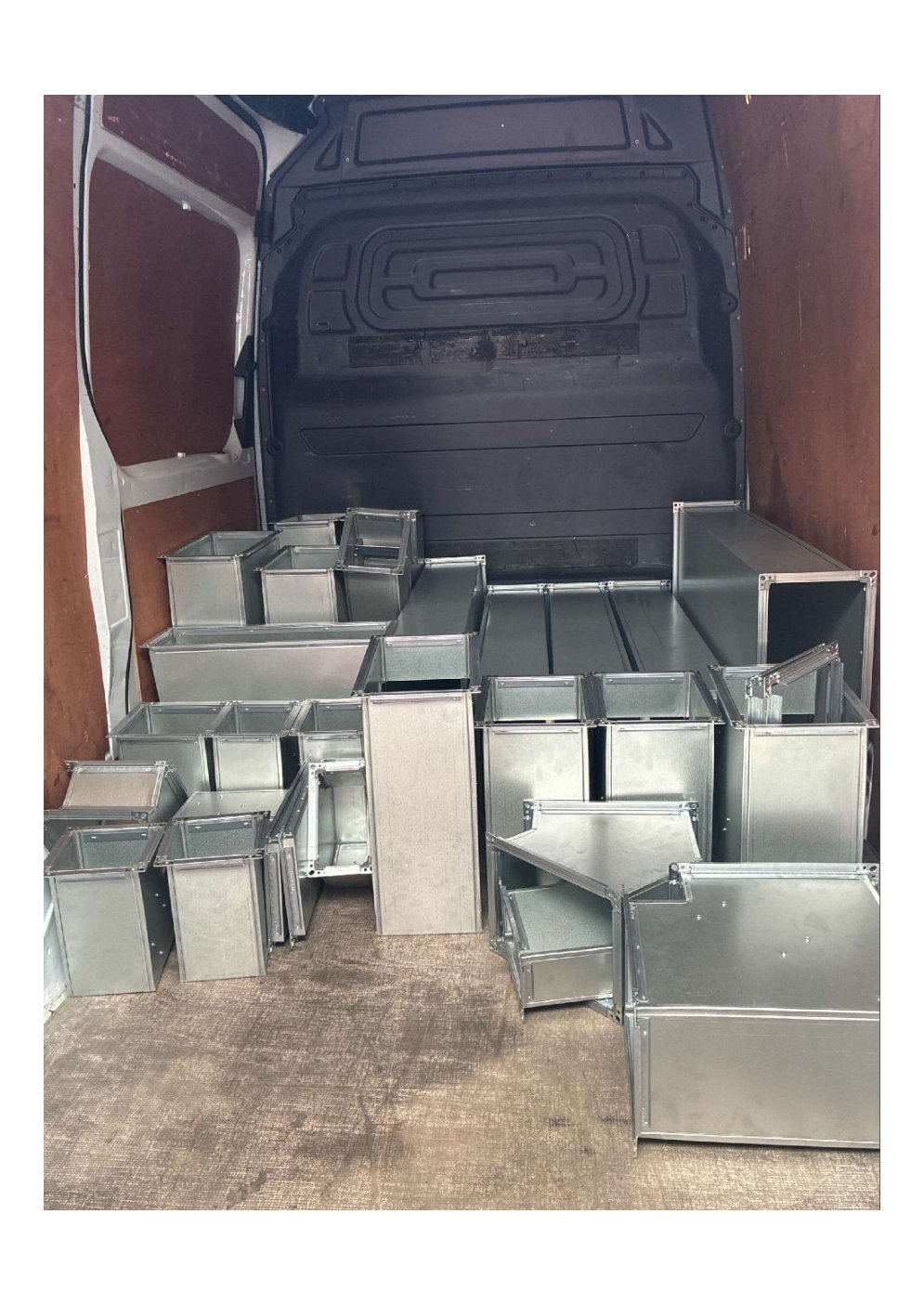
When the freight itself creates the challenge, getting the sequencing and protection right from the first moment matters
Galvanised ducting sections present a specific kind of difficulty that catches out hauliers who treat every load the same. The pieces are rectangular and rigid, which sounds straightforward until you consider that they come in varying lengths, they have exposed edges and they stack against one another in a way that creates pressure points across the load if the build is not done carefully. For a manufacturing client, damaged ducting is not simply an inconvenience. It means delayed installations, cost queries and a conversation about who is responsible for the loss. We loaded the sections in Birmingham with the geometry of the load in mind, working methodically to ensure that pieces were supported correctly and that the weight distribution across the floor of the van was even. Securing the load so that movement in transit did not allow sections to shift against one another was a practical priority from the outset. When you are moving components that feed directly into a production or installation schedule, a load that arrives out of condition can set a whole project back.
The Luton van gives us the floor space and height clearance to handle bulky sectional loads without forcing a compromise
For a load like galvanised ducting, the choice of vehicle is a practical decision rather than a default. Our Luton van provides the covered load bay dimensions to accommodate long rectangular sections lying flat without overhang or forced angles, and the enclosed body protects the load from road conditions and weather across the full length of the West Midlands route. The height of the load bay matters with ducting because sections often cannot be laid in a single flat plane and need to be stacked with care, something that a lower roof profile would make significantly harder. Across the West Midlands, road conditions and route variability mean that load security matters throughout the journey, not just at departure. We kept the drive smooth and the load checked, arriving at the destination with every section in the condition it left Birmingham. For manufacturing clients whose delivery schedules feed into wider operational timelines, that consistency is what makes the difference between a supplier they can rely on and one they have to manage.
If you have freight with requirements like these, get in touch with our team and we can talk through how we would move it.